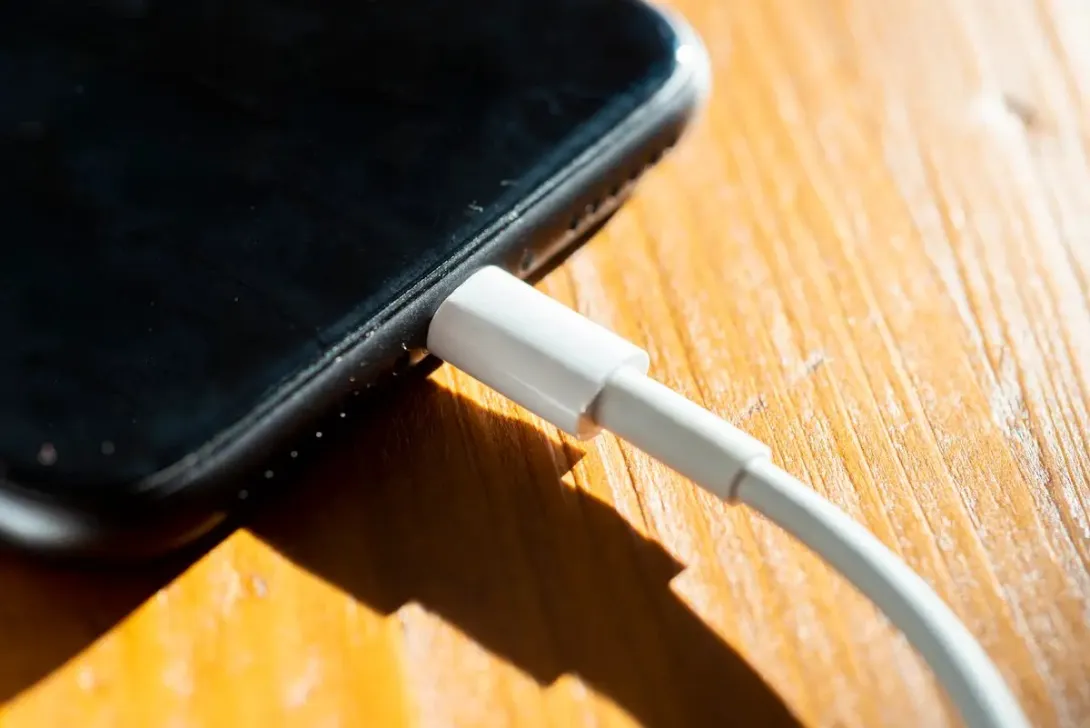
Every phone owner knows this cable. It looks completely normal. It plugs in like a cable is supposed to plug in. And then, nothing. No lightning bolt, no cheerful chime, no percentage ticking upward. Just your phone sitting there at 4 percent, quietly judging you, while the cable pretends it has never met this device before.
The fix, of course, is the angle. Not just any angle. One specific, unreasonable angle, discovered by accident at 11:47 p.m. when you are already in bed. Bend the cord slightly left, prop it against a book, hold your breath, and suddenly it charges like it was born for the job. Move it a millimeter and the whole arrangement collapses. The phone makes that smug little disconnect sound, and you are back to negotiating with a piece of wire.
So you become an engineer. The cable gets wedged against the nightstand. It gets draped over a shoe for counterweight. It gets taped, propped, and balanced in a little charging shrine built out of whatever is within arm's reach. You learn to set the phone down the way bomb technicians set down things they respect. One careless nudge from a cat, a partner, or gravity itself, and the battery icon goes back to red.
The truly insulting part is that the cable works just well enough to survive. A cable that died completely would be easy: you would throw it out and buy a new one. This one charges sometimes. It charged yesterday. It might charge tonight if you hold it correctly and believe hard enough. So it stays, month after month, because replacing a mostly working cable feels wasteful, and because some stubborn part of you refuses to be outsmarted by an accessory.
Meanwhile the battery percentage becomes a suspense drama. You wake up after a full night plugged in — or allegedly plugged in — to discover the phone is at 11 percent because the angle shifted sometime around 3 a.m. Now your morning starts with triage: charge in the kitchen while the coffee brews, charge in the car, guard every percent like it is rationed. A device with a dead battery is not just inconvenient. It is your alarm clock, your map, your wallet, and your entire social life, all held hostage by a fraying cord.
And the replacement cables are never where you left them. There is a drawer somewhere in every home full of cables for phones nobody owns anymore, plugs for countries you visited once, and one mysterious cord that fits nothing on Earth. The one cable you actually need is always in another room, another bag, or another state of existence entirely.
Here is the honest truth: a charging cable costs less than lunch. The rational move takes ten minutes. But that is not really what this is about. That wobbly cable is a tiny daily reminder that modern life runs on fragile little connections, and that the most advanced phone ever made can be defeated by a bent wire and a bad angle.
Buy the new cable. You know you should. We all know we should. And yet tonight, there you will be, propping the old one against a book at exactly the right angle, whispering, just stay, just stay, just stay.